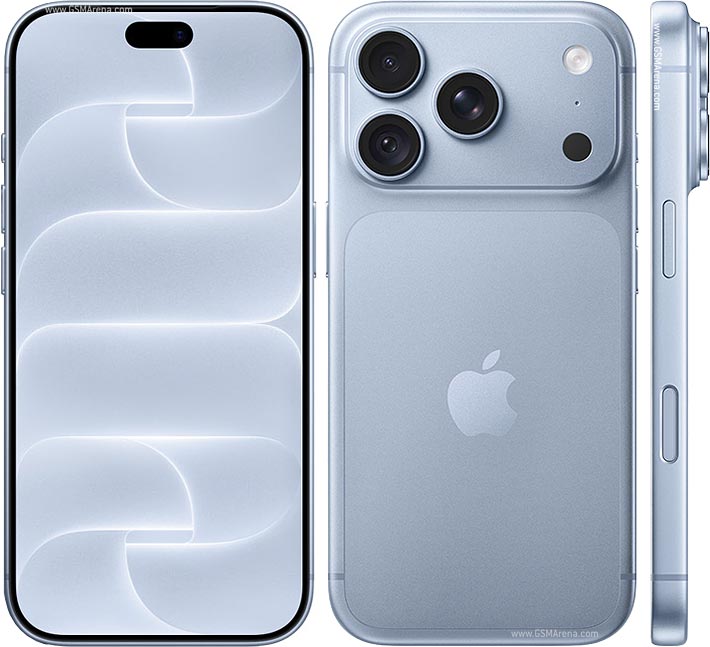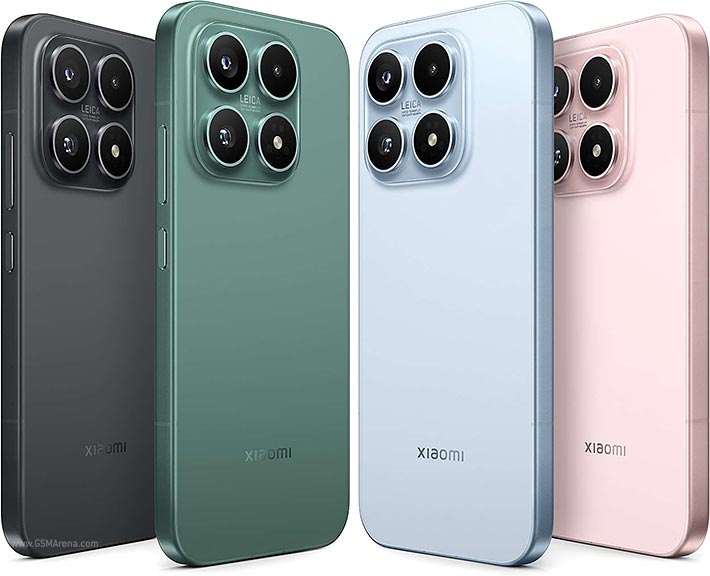
Quick Summary
- Xiaomi 17, 17 Pro and 17 Pro Max launched in China on September 25, 2025 — the world's first Snapdragon 8 Elite Gen 5 phones. All have triple 50MP Leica cameras; the Pro models add a rear "Magic Back Screen" AMOLED display.
- Batteries are enormous: 7,000mAh (17, China spec), 6,300mAh (17 Pro) and 7,500mAh (17 Pro Max), all with 100W wired and 50W wireless charging.
- Poco F8 Pro and F8 Ultra launched November 26, 2025 at $579 and $729, with Bose-tuned audio and Snapdragon 8 Elite-class chips.
- Kenya pricing: 17 Pro Max ~KES 133,000; 17 Ultra KES 159,999; Poco F8 Ultra KES 102,699-124,999 for 16GB/512GB; F8 Pro ~KES 85,000-108,500.
- All five support Safaricom and Airtel 5G; authorised units carry a real Xiaomi Kenya warranty, unlike pure grey imports.
Kenya prices and where to buy
The Xiaomi 17 series reached Kenya through a mix of official Xiaomi Store stock and parallel importers, so pricing varies more than for Samsung or Tecno. The Poco F8 series is widely listed. Prices below were checked across Xiaomi Store Kenya, Avechi, Phoneshop Kenya, Phones & Tablets Kenya and priceinkenya.com at the end of September 2026.
| Model | Variant | Kenya price (KES) | Seen at |
|---|---|---|---|
| Xiaomi 17 | 12GB + 256GB | KES 95,000 – 113,000 (estimated) | Import listings; priceinkenya tracking ~KES 113,000 |
| Xiaomi 17 Pro | 12GB + 256GB | KES 90,500 – 110,000 (estimated) | priceinkenya.com listing ~KES 90,500 |
| Xiaomi 17 Pro Max | 16GB + 512GB | KES 133,000 | priceinkenya.com (in stock) |
| Xiaomi 17 Ultra | 16GB + 512GB | KES 159,999 | Xiaomi Store Kenya |
| Poco F8 Pro | 12GB + 256GB / 512GB | KES 85,000 – 108,500 (estimated) | priceinkenya.com ~KES 108,500; varies by variant |
| Poco F8 Ultra | 16GB + 512GB | KES 102,699 – 124,999 | Avechi, Phoneshop Kenya, Xiaomi Store Kenya |
Watch listings carefully: China-market Xiaomi 17 units carry the 7,000mAh battery while global units are rated 6,330mAh, and some importers flash a global ROM on Chinese hardware — ask which region the unit is before paying.
The headline features, verified
Magic Back Screen on the Pro models
The Xiaomi 17 Pro and Pro Max embed a second AMOLED display inside the camera island — 2.7 inches on the Pro, 2.9 inches on the Pro Max, both 120Hz and 3,500 nits. It shows notifications, an always-on clock, music controls and widgets, acts as a viewfinder for flagship-quality rear-camera selfies, and even plays retro games with a dedicated case.
World's first Snapdragon 8 Elite Gen 5
All three Xiaomi 17 phones debuted Qualcomm's 3nm flagship chip on September 25, 2025 — two prime Oryon V3 cores at 4.6GHz plus six performance cores at 3.62GHz, with the Adreno 840 GPU. The Poco F8 Ultra uses the same chip, while the F8 Pro runs last year's still-formidable Snapdragon 8 Elite.
Silicon-carbon battery supremacy
The 17 Pro Max packs 7,500mAh, the base 17 carries 7,000mAh in China (6,330mAh on the global version), and the Poco F8 Ultra runs 6,500mAh — all silicon-carbon cells that fit more capacity in less space. Even heavy users can expect genuine two-day endurance.
Bose-tuned audio on the Poco F8 series
Poco partnered with Bose for the F8 series speaker tuning. The F8 Ultra goes further with a rear-mounted woofer that pairs with the stereo speakers for a 2.1 setup — the loudest, fullest phone speaker system of 2025 and a real plus for music and video without earphones.
Xiaomi 17 and Poco F8 gallery
Official renders of the five phones covered in this guide.




Xiaomi 17 series: full spec comparison
| Spec | Xiaomi 17 | 17 Pro | 17 Pro Max |
|---|---|---|---|
| Chipset | Snapdragon 8 Elite Gen 5 (3nm), Adreno 840 | Snapdragon 8 Elite Gen 5 (3nm), Adreno 840 | Snapdragon 8 Elite Gen 5 (3nm), Adreno 840 |
| Main display | 6.3" LTPO AMOLED, 2656 x 1220, 1-120Hz, 3500 nits | 6.3" LTPO AMOLED, 2656 x 1220, 1-120Hz, 3500 nits | 6.9" LTPO AMOLED, 2608 x 1200, 1-120Hz, 3500 nits |
| Rear display | None | 2.7" AMOLED, 904 x 572, 120Hz "Magic Back Screen" | 2.9" AMOLED, 976 x 596, 120Hz "Magic Back Screen" |
| Main camera | 50MP Leica, f/1.7, 1/1.31" Light Fusion sensor, OIS | 50MP Leica Light Fusion 950L, OIS | 50MP Leica Light Fusion 950L, OIS |
| Telephoto | 50MP 2.6x (60mm), OIS | 50MP 5x periscope, OIS | 50MP 5x periscope, OIS |
| Ultra-wide / selfie | 50MP UW (102-degree) / 50MP selfie | 50MP UW / 50MP selfie | 50MP UW / 50MP selfie |
| Battery | 7,000mAh Si/C (China) / 6,330mAh (global) | 6,300mAh Si/C | 7,500mAh Si/C |
| Charging | 100W wired, 50W wireless, 22.5W reverse | 100W wired, 50W wireless, 22.5W reverse | 100W wired, 50W wireless, 22.5W reverse |
| Build | IP68, Dragon Crystal Glass, 191g | IP68, Dragon Crystal Glass 3 | IP68, Dragon Crystal Glass 3, 219g |
| Software | HyperOS 3 (Android 16) | HyperOS 3 (Android 16) | HyperOS 3 (Android 16) |
| China launch price | CNY 4,499 (~$630) | CNY 4,999 (~$700) | CNY 5,999 (~$840) |
Poco F8 series: full spec comparison
| Spec | Poco F8 Pro | Poco F8 Ultra |
|---|---|---|
| Chipset | Snapdragon 8 Elite (3nm), Adreno 830 | Snapdragon 8 Elite Gen 5 (3nm), Adreno 840 + VisionBoost D8 |
| Display | 6.59" AMOLED, 1156 x 2510, 120Hz, 3500 nits, Gorilla Glass 7i | 6.9" AMOLED, 1200 x 2608, 120Hz, 3500 nits, Poco Shield Glass |
| Main camera | 50MP Light Fusion 800, f/1.88, 1/1.55", OIS | 50MP Light Fusion 950, 1/1.31", OIS |
| Telephoto | 50MP 2.5x (60mm) | 50MP 5x periscope, OIS |
| Ultra-wide / selfie | 8MP UW / 20MP selfie | 50MP UW / 32MP selfie |
| Battery | 6,210mAh Si/C | 6,500mAh Si/C |
| Charging | 100W wired (no wireless) | 100W wired, 50W wireless, 22.5W reverse |
| Audio | Bose-tuned stereo speakers | Bose-tuned 2.1 system with rear woofer |
| Build | IP68, metal frame, Gorilla Glass 7i, 199g | IP68, metal frame, Poco Shield Glass, ~218g |
| Software | HyperOS 3 (Android 16), 4 OS + 6 yrs security | HyperOS 3 (Android 16), 4 OS + 6 yrs security |
| Launch price | $579 (early bird $529) | $729 (early bird $679) |
The rear screen: gimmick or genuinely useful?
Xiaomi tried this before on the Mi 11 Ultra with a tiny 1.1-inch strip — cute, but barely functional. The 17 Pro and Pro Max go much further: the entire camera island is a proper 2.7/2.9-inch 120Hz AMOLED panel, touch-sensitive and bright enough to use outdoors. The killer feature is the selfie viewfinder: you frame yourself on the back screen and shoot with the 50MP Leica main camera or the 5x periscope, giving you selfies no front camera on earth can match — a real upgrade for Kenyan content creators shooting TikTok and Reels. Beyond that it handles always-on clock, notifications, music controls, widgets and retro gaming with an optional case. Not essential, but it costs you no battery endurance.
Performance and battery: where Xiaomi embarrasses rivals
The Snapdragon 8 Elite Gen 5 is Qualcomm's 3nm monster: two Oryon V3 prime cores at 4.6GHz, six performance cores at 3.62GHz and the Adreno 840. Paired with a 6,700mm² vapour chamber on the F8 Ultra, sustained gaming in CODM, eFootball and Genshin Impact stays cool and fast. The F8 Pro's last-gen Snapdragon 8 Elite is barely slower in real use and remains far ahead of anything in the mid-range. Battery is the knockout stat: silicon-carbon cells let Xiaomi fit 7,500mAh in the 17 Pro Max and 6,500mAh in the F8 Ultra — versus 5,000mAh on a Galaxy S26 Ultra — with 100W wired charging that takes a dead phone to useful charge in about 15 minutes. For Kenyan buyers dealing with KPLC outages and long days away from sockets, these are arguably the most practical flagships on sale.
vs Samsung: the honest value math
A Galaxy S26 Ultra-class phone costs KES 160,000-200,000 in Kenya. The Poco F8 Ultra at ~KES 110,000 matches or beats it on raw performance, battery capacity, charging speed and speaker quality, while conceding on camera consistency, software polish, resale value and service-network depth. The Xiaomi 17 Pro Max at ~KES 133,000 closes most of the camera and build gap while adding the rear display and a bigger battery.
The counterweights are real: Samsung's seven years of updates versus four on Poco, Knox, wider service centres, and stronger second-hand prices. If you keep phones for four-plus years or depend on after-sales support in smaller towns, the premium for a Galaxy still makes sense. If you upgrade every two years and want maximum hardware now, Xiaomi and Poco are the rational buy.
Which one should you buy?
Xiaomi 17 / 17 Pro
Strength: Compact 6.3-inch flagships with SD 8 Elite Gen 5 and Leica cameras; the Pro adds the 2.7-inch Magic Back Screen and 5x periscope
Trade-off: Base 17 has no rear display and only a 2.6x tele; Pro's 6,300mAh battery is smallest in the family
Best for: Buyers who want a smaller flagship; the Pro suits early adopters after the dual-screen novelty
Xiaomi 17 Pro Max
Strength: 6.9-inch display, 2.9-inch rear screen, 7,500mAh battery, 5x periscope — the full package at KES ~133K
Trade-off: 219g and very large; still cheaper to import than buy locally in some cases
Best for: Power users who want everything and plan to use the rear display for selfies and content
Poco F8 Pro
Strength: Last-gen Snapdragon 8 Elite, real 2.5x telephoto, 100W charging — flagship speed at mid-flagship money
Trade-off: No wireless charging, 8MP ultra-wide, F8 Ultra exists for ~KES 20K more
Best for: Gamers and performance-first buyers on a KES 90-110K budget
Poco F8 Ultra
Strength: SD 8 Elite Gen 5 + VisionBoost D8, 5x periscope, Bose 2.1 speakers, 6,500mAh — the value flagship king
Trade-off: HyperOS ads/bloat need taming, no Leica tuning, plastic-frame feel vs premium rivals
Best for: Buyers who want 90% of a KES 160K flagship experience for around KES 110K
Warranty, region variants and buying tips
Unlike Nothing, Xiaomi operates officially in Kenya through Xiaomi Store Kenya and authorised dealers — phones bought there carry a manufacturer warranty serviced locally. Independent shops like Avechi and Phoneshop sell a mix of official and imported units with shop warranties. The distinction matters most for the Xiaomi 17 line, where China-first stock dominates: a Chinese unit flashed to global ROM works fine on Kenyan networks but may miss a band or two and usually carries only the seller's warranty. Before paying, confirm the region in Settings > About phone, verify battery capacity (7,000mAh China vs 6,330mAh global on the base 17), match the IMEI via *#06# to the box, check Google Play certification, and get warranty terms in writing. HyperOS ships with ads in system apps — budget ten minutes to disable them.
FAQs
How much is the Xiaomi 17 Pro Max in Kenya?
As of October 2026, the Xiaomi 17 Pro Max (16GB + 512GB) lists at about KES 133,000 at Kenyan importers like priceinkenya.com, while the Xiaomi 17 Ultra (16GB + 512GB) is KES 159,999 at Xiaomi Store Kenya. The base Xiaomi 17 and 17 Pro are scarcer locally, running roughly KES 90,000 to 113,000 depending on variant and importer.
What is the rear screen on the Xiaomi 17 Pro for?
The Magic Back Screen is a functional AMOLED display inside the camera island — 2.7 inches on the 17 Pro, 2.9 inches on the Pro Max, both 120Hz. Its most useful tricks: a viewfinder so you can take selfies with the main 50MP Leica camera, an always-on clock and notification panel, music controls, widgets, and retro gaming with an optional case.
Is the Poco F8 Ultra better value than the Xiaomi 17 Pro Max in Kenya?
On raw hardware per shilling, yes: the F8 Ultra gives you the same Snapdragon 8 Elite Gen 5, a 5x periscope, wireless charging and a 6,500mAh battery for roughly KES 103,000 to 125,000 — about KES 10,000 to 30,000 less than the 17 Pro Max. You lose the Leica tuning, the rear display, the LTPO efficiency finesse and the premium finish. If cameras and novelty matter, pay for the Xiaomi; if performance-per-shilling matters, buy the Poco.
Do Xiaomi 17 and Poco F8 phones work on Safaricom 5G?
Yes — all five models are global 5G phones with the sub-6GHz bands Safaricom and Airtel Kenya use, plus VoLTE for HD calls. The Poco F8 series and Xiaomi 17 Pro Max also support eSIM. One caveat: some Xiaomi 17 units in Kenya are Chinese-market imports running a global ROM flash — confirm with the seller that the unit supports Google services properly and check the model region in Settings.
Does Xiaomi have official warranty support in Kenya?
Yes — Xiaomi has an official Kenyan operation, and phones bought from authorised sellers like Xiaomi Store Kenya carry a manufacturer warranty honoured by Xiaomi's local service network. Grey imports from independent shops carry only a dealer warranty, so confirm whether the unit is a Kenyan official unit or an import before paying, and keep a receipt with the IMEI.
Sources
- GSMArena: Xiaomi 17 Pro Max full specifications
- GSMArena: Poco F8 Ultra and F8 Pro launch coverage (Nov 26, 2025)
- Xiaomi official: Xiaomi 17 global specifications (6,330mAh global battery)
- Avechi Kenya: Poco F8 Ultra 16GB/512GB Kenyan pricing
- Xiaomi Store Kenya: Xiaomi 17 Ultra official Kenyan pricing
- Price in Kenya: Xiaomi 17 Pro Max Kenyan listing