Quick Summary
- Apple announced the iPhone 18 Pro, iPhone 18 Pro Max and foldable iPhone Duo on September 9, 2026. The Pro models released September 18; the Duo ships October 23 after October 16 pre-orders.
- Headline upgrades: a 48MP variable-aperture main camera (f/1.48–f/4.0), the 2nm A20 Pro chip, a smaller Dynamic Island, and the biggest battery jump ever — up to 45 hours of video on the Pro Max.
- Kenya pricing: iPhone 18 Pro from ~KES 200,000; 18 Pro Max from ~KES 255,000; iPhone Duo pre-orders from ~KES 300,000.
- The Duo is a 7.6-inch foldable with a 5.4-inch cover screen, Touch ID (no Face ID), no telephoto camera, eSIM-only worldwide, starting at $1,999 — roughly KES 300,000+ locally.
- There is no plain iPhone 18 or 18e yet — Apple split the launch, with those models (plus iPhone Air 2) expected in spring 2027.
- Watch SIM variants: US imports are eSIM-only, international units keep nano-SIM + eSIM. Safaricom and Airtel both support eSIM activation.
Kenya prices and where to buy
The iPhone 18 Pro line hit Nairobi shelves within days of the September 18 global release through importers and authorized resellers — Kenya has no official Apple Store, so pricing floats with exchange rates, import duties and each shop's margin. Prices below were checked across iTey Store, Mobile Hub Kenya, Price in Kenya, Phone Shop Kenya, Avechi and Smartworld Kenya at the end of September 2026. Duo pricing reflects pre-order and reservation listings ahead of its October 23 ship date.
| Model | Variant | Kenya price (KES) | Seen at |
|---|---|---|---|
| iPhone 18 Pro | 256GB (nano-SIM + eSIM) | KES 200,000 – 220,000 | iTey Store, Mobile Hub Kenya, Phone Shop Kenya |
| iPhone 18 Pro | 256GB (eSIM-only import) | KES 195,000 – 215,000 | Price in Kenya, iTey Store (eSIM units list ~KES 15,000 lower) |
| iPhone 18 Pro | 512GB | KES 235,000 – 260,000 | iTey Store, Mobile Hub Kenya |
| iPhone 18 Pro Max | 256GB (nano-SIM + eSIM) | KES 255,000 – 275,000 | Price in Kenya, Mobile Hub Kenya |
| iPhone 18 Pro Max | 512GB – 1TB | KES 290,000 – 340,000 | Price in Kenya, Mobile Hub Kenya |
| iPhone Duo | 256GB (pre-order, ships Oct 23) | KES 299,999 – 345,000 | Avechi, Smartworld Kenya, iTey Store (deposit scheme) |
| iPhone Duo | 512GB – 2TB | KES 340,000 – 515,000 (approximate) | iTey Store pre-order listings |
| iPhone 17 Pro (previous gen) | 256GB, while stocks last | KES 152,000 – 195,000 | Price in Kenya, Kenyan resellers clearing stock |
Two quirks worth knowing: eSIM-only US imports usually list around KES 10,000–15,000 cheaper than dual-SIM international units, and the burgundy finish has been carrying roughly a KES 10,000 premium at early stock. If a listing is dramatically cheaper than the ranges above, verify the IMEI, warranty terms and whether the unit is refurbished before paying.
What is actually new?
This is Apple's biggest Pro update since the camera-plateau redesign: the first physically adjustable aperture on an iPhone, the first 2nm phone chip, a battery-life leap, and — for the first time ever — a foldable iPhone sharing the stage.
Variable-aperture 48MP Fusion Main camera
The headline upgrade: six laser-cut blades let the main camera physically adjust between f/1.48, f/1.8, f/2.8 and f/4.0 — a first on iPhone. It opens wide for night shots, narrows for group photos and landscapes, and pros can set it manually in the Camera app or from third-party apps via a new API.
A20 Pro: Apple's first 2nm phone chip
Built on a 2-nanometre process like the M6, the A20 Pro pairs a 6-core CPU (two desktop-class 'super cores' plus four efficiency cores) with a 7-core GPU featuring Neural Accelerators — Apple claims around 40 percent more graphics performance — and a dual 16-core Neural Engine for on-device Apple Intelligence and Siri AI.
Biggest battery jump in iPhone history
The 18 Pro Max is rated for up to 45 hours of video playback — six hours more than the 17 Pro Max — thanks to a larger battery (5,391mAh nano-SIM / 5,567mAh eSIM variants) plus 2nm efficiency and a next-generation vapor chamber that sustains performance without throttling.
Smaller Dynamic Island, new colours
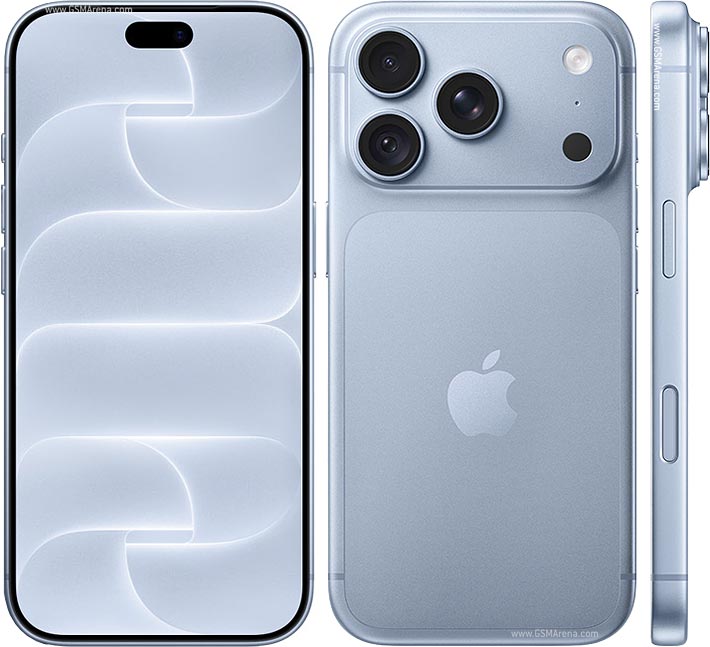
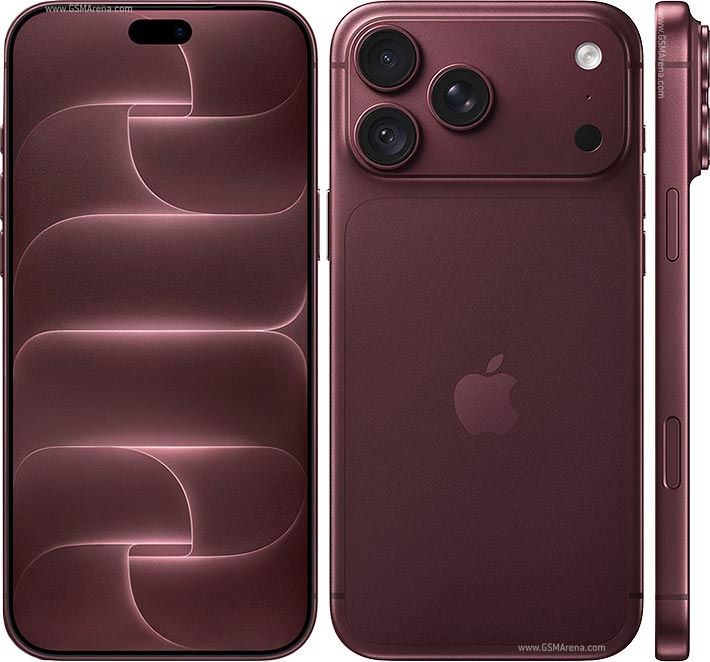
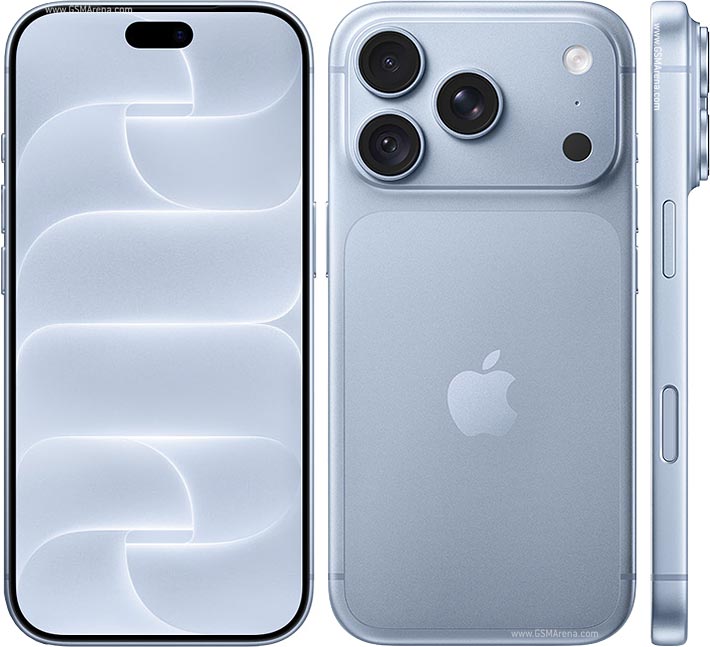
Both Pro models shrink the Dynamic Island further and come in deep black, silver, glacier and a new burgundy finish with colour-matched back glass. In Kenya, burgundy units are already listing at a premium of roughly KES 10,000 at some importers.
Pro camera controls and Photographic Styles 3
A new Pro controls interface exposes aperture, shutter speed, white balance and a live histogram. Cinematic effects can now be applied after capture on footage up to 60fps, time-lapse records in 4K Dolby Vision, and ProRes RAW, Apple Log 2 and genlock support make it a genuine production camera.
iPhone Duo: the first foldable iPhone
Announced at the same September 9 event, the Duo opens into a 7.6-inch display — 50 percent larger than the 18 Pro Max — in a body just 5.2mm thin unfolded. It trades Face ID for side-mounted Touch ID, drops the telephoto camera, and ships October 23 starting at $1,999.
Gallery
Official product imagery for the iPhone 18 Pro, iPhone 18 Pro Max and the foldable iPhone Duo.


Full spec comparison: 18 Pro vs 18 Pro Max vs Duo
| Spec | iPhone 18 Pro | iPhone 18 Pro Max | iPhone Duo |
|---|---|---|---|
| Display | 6.3" LTPO Super Retina XDR, 120Hz, 3,000 nits peak | 6.9" LTPO Super Retina XDR, 120Hz, 3,000 nits peak | 7.6" folding LTPO OLED (inner) + 5.4" cover, 120Hz, 3,000 nits peak |
| Chipset | Apple A20 Pro (2nm), 6-core CPU, 7-core GPU, dual 16-core Neural Engine | Apple A20 Pro (2nm), 6-core CPU, 7-core GPU, dual 16-core Neural Engine | Apple A20 Pro (2nm), 6-core CPU, 7-core GPU |
| RAM | 12GB | 12GB | 12GB |
| Main camera | 48MP Fusion Main, variable aperture f/1.48–f/4.0, sensor-shift OIS | 48MP Fusion Main, variable aperture f/1.48–f/4.0, sensor-shift OIS | 48MP wide, f/1.6, sensor-shift OIS (no variable aperture) |
| Zoom | 48MP 4x tetraprism telephoto (100mm), 8x optical-quality (200mm), 40x digital | 48MP 4x tetraprism telephoto (100mm), 8x optical-quality (200mm), 40x digital | No telephoto — 48MP ultra-wide is the second lens |
| Front camera | 18MP Center Stage, f/1.9, autofocus | 18MP Center Stage, f/1.9, autofocus | Under-display inner camera + 12MP cover camera |
| Battery (Apple rating) | Up to 36h video playback | Up to 45h video playback | Up to 31h (inner) / 44h (cover) video playback |
| Biometrics | Face ID, smaller Dynamic Island | Face ID, smaller Dynamic Island | Touch ID (side-mounted fingerprint sensor) |
| SIM | Nano-SIM + eSIM (international) / eSIM-only (US imports) | Nano-SIM + eSIM (international) / eSIM-only (US imports) | eSIM + eSIM only, all markets |
| Build | Aluminum unibody, Ceramic Shield 2, IP68 | Aluminum unibody, Ceramic Shield 2, IP68 | Grade-5 titanium frame and hinge, Ceramic Shield 2, IP68 |
| US price | From $1,199 (256GB) | From $1,299 (256GB) | From $1,999 (256GB) up to $3,199 (2TB) |
Camera: what variable aperture actually changes
The iPhone 18 Pro's 48MP Fusion Main camera is the first iPhone lens with a physical, variable aperture. Six blades — thinner than a human hair, per Apple — rotate between f/1.48, f/1.8, f/2.8 and f/4.0. In dark scenes the camera opens to f/1.48 and pulls in more light, meaning faster shutter speeds and sharper night shots. For group photos it stops down to f/4.0 so people at the back stay in focus instead of blurring out.
The rest of the Pro Fusion system is carried over from the 17 Pro at a hardware level: a 48MP 13mm ultra-wide and a 48MP 100mm tetraprism telephoto with 3D sensor-shift stabilization, which also produces an optical-quality 8x (200mm) crop — a 16x optical-quality zoom range and up to 40x digital zoom. The selfie camera steps up to an 18MP Center Stage sensor with autofocus.
Video is where the gap widens: 4K Dolby Vision at up to 120fps, ProRes RAW, Apple Log 2, genlock for multi-camera shoots, post-capture Cinematic mode up to 60fps and 4K time-lapse. For Kenyan content creators shooting Reels, TikTok and client work, the variable aperture plus Pro controls — aperture, shutter, white balance and a live histogram in the Camera app — is the most meaningful upgrade in years.
The Duo is the odd one out: a dual 48MP system (wide + ultra-wide) with no telephoto at all — space constraints of the 5.2mm unfolded chassis. If zoom matters, the Duo is not your camera phone.
Performance: A20 Pro and the 2nm jump
A20 Pro is Apple's first phone chip on a 2-nanometre process, sharing a new architecture with the M6. It pairs a 6-core CPU — two "super cores" plus four efficiency cores — with a 7-core GPU that integrates Neural Accelerators in each core, and a dual 16-core Neural Engine (32 NPU cores total) driving iOS 27's Apple Intelligence and the new Siri AI.
The practical gains: around 40 percent more GPU performance per Apple, and a next-generation vapor chamber that keeps frame rates up during long gaming or 4K ProRes recording sessions instead of throttling after a few minutes. Both Pros ship with 12GB of RAM and storage up to 2TB.
Connectivity is fully modern: Wi-Fi 7, Bluetooth 6.0, USB-C at 10Gb/s on the Pro models, second-generation Ultra Wideband and NFC. As always, none of it matters more than the fact that these chips comfortably handle everything on the App Store — the real win is longevity and resale value.
Battery life and charging
Apple's ratings: the iPhone 18 Pro manages up to 36 hours of video playback (33h streamed), while the 18 Pro Max reaches 45 hours (40h streamed) — a six-hour jump over the 17 Pro Max and the largest single increase Apple has ever claimed for the line. GSMArena lists capacities of 4,056mAh/4,288mAh for the 18 Pro and 5,391mAh/5,567mAh for the Pro Max depending on whether the unit has a physical SIM tray or is eSIM-only.
Charging got faster too: 50 percent in around 15 minutes with a 60W or higher USB-C adapter supporting Adjustable Voltage Supply, or 50 percent in 30 minutes on a 25W MagSafe/Qi2 charger, plus 4.5W reverse wired charging for accessories. In Kenyan terms, that 15-minute boost is genuinely useful — a short sit-down at a charging point during a blackout or a quick top-up before a commute now buys most of a day.
The Duo splits its cells across the two halves and rates up to 31 hours of video on the inner display or 44 hours on the cover screen — competitive, given it is driving the largest display ever fitted to an iPhone.
iPhone Duo: the foldable deep-dive
The iPhone Duo is Apple's first foldable — a book-style device that measures 117.8 x 84.1 x 11.3mm closed and opens into a 7.6-inch LTPO Super Retina XDR display at just 5.2mm thin, making it the thinnest iPhone ever when open. The 5.4-inch cover display has over 90 percent of the screen area of an iPhone 18 Pro, so it works as a complete phone when closed. The inner panel runs at 1878 x 2670 (~430ppi) in a productivity-friendly 4:3 aspect ratio, with a nano-texture, anti-reflective finish and a crease Apple claims is nearly invisible.
The engineering choices are notable: a grade-5 titanium frame and hinge, Ceramic Shield 2 on the folded front and glass back, IP68 rating, stylus support, and a side-mounted Touch ID fingerprint sensor — Face ID sacrificed to keep the halves thin. There is an under-display camera on the inner screen plus a 12MP cover camera, while the rear setup is a 48MP wide (f/1.6) and 48MP ultra-wide pair with no telephoto. It runs the same A20 Pro with 12GB RAM, adds satellite Emergency SOS, Messages and Find My, and is eSIM-only in every market.
Pricing is steep: $1,999 (256GB), $2,199 (512GB), $2,599 (1TB) and $3,199 (2TB) in the US, with Kenyan pre-orders listing from roughly KES 300,000 to 345,000 for the base model at Avechi, Smartworld Kenya and iTey Store — iTey's deposit scheme asks 70 percent up front. Colours are Star White and Night Sky. It launches October 23 in 70+ countries, but Kenya is not an official launch market, so local units arrive through the same importer channels at a markup over the US price.
Honest advice for Kenya: a first-generation foldable at this price is a statement piece, not a value buy. The inner display has no proven long-term durability record, AppleCare-style support is limited locally, and a screen repair on a foldable will be painful. Buy it if the fold is the point — not because it is the "best iPhone."
iPhone 18 Pro vs iPhone 17 Pro: should you upgrade?
Apple discontinued the 17 Pro and 17 Pro Max from its own store the day the 18 Pros launched, but Kenyan retailers still carry stock — and the price gap is meaningful. Here is how the upgrade math works out.
| Area | What changed | Worth the upgrade? |
|---|---|---|
| Camera | Variable-aperture main camera and a new sensor. Telephoto and ultra-wide hardware carry over from the 17 Pro — the upgrade is real but concentrated on the main lens. | Yes for low-light shooters and video creators |
| Performance | A20 Pro on 2nm vs A19 Pro on 3nm: faster sustained GPU performance (Apple claims ~40% more), dual Neural Engine, same 12GB RAM. | Noticeable for gaming, 4K editing and AI features |
| Battery | Pro Max jumps from 39h to 45h video playback; Pro from 33h to 36h. Charging also improves: 50% in ~15 minutes with a 60W+ adapter (was ~20 minutes at 40W). | Yes — the largest single-year jump Apple has claimed |
| Design | Smaller Dynamic Island, new glacier and burgundy colours; same aluminum unibody approach and Ceramic Shield 2 protection. | Cosmetic — not a reason to upgrade alone |
| Software | iOS 27 with Siri AI ships on both; the 17 Pro gets the same update. Apple Intelligence features are nearly identical. | No — the 17 Pro is fully supported |
| Price gap in Kenya | A new 18 Pro costs roughly KES 200,000+ while remaining 17 Pro stock lists from about KES 152,000 — a gap of KES 50,000 or more. | 17 Pro is the value pick while stock lasts |
Rough translation: coming from an iPhone 14 Pro or older, the 18 Pro is a massive jump. Coming from a 17 Pro, upgrade only if the camera or battery improvements map to your daily use — otherwise bank the ~KES 50,000 difference.
Which one should you buy?
iPhone 18 Pro
Strength: Full Pro camera system with variable aperture, A20 Pro, 36h battery in a 6.3-inch body that fits one hand
Trade-off: Smaller battery than the Max; Kenyan street price is still close to KES 200,000
Best for: Most Kenyan buyers who want the flagship camera without the Max's size or price
iPhone 18 Pro Max
Strength: 45-hour video playback — the best battery ever in an iPhone — plus the 6.9-inch display and the same camera stack
Trade-off: 249g and genuinely large; pushes past KES 255,000 before accessories
Best for: Heavy users, creators and anyone who prioritizes screen size and battery above all
iPhone Duo
Strength: A phone that unfolds into a 7.6-inch near-iPad-mini canvas: multitasking, stylus support, satellite messaging, titanium hinge
Trade-off: KES 300,000+, no telephoto camera, Touch ID instead of Face ID, first-generation durability unknowns, eSIM-only
Best for: Early adopters and professionals who will genuinely use the fold — not a first iPhone
If none of these fit the budget, remember Apple's official lineup still includes the iPhone 17e, iPhone 16, iPhone 17 and iPhone Air — and a discounted iPhone 17 Pro at a Kenyan reseller arguably beats the 18 Pro on pure value while stock lasts. We compare the entire lineup in a separate guide.
Kenya buying guide: SIM variants, eSIM, warranty and financing
SIM variants: US-market iPhone 18 Pro models are eSIM-only; international versions (Dubai, UK and most imports Kenyan shops carry) keep a nano-SIM tray alongside eSIM. Both work fine — Safaricom sells eSIM QR codes in-store (KES 150 prepaid, free on postpay) and Airtel Kenya activates eSIM at its shops with your national ID. The Duo is eSIM-only everywhere, so factor in a trip to a Safaricom or Airtel shop on day one.
Warranty: Apple has no official store in Kenya, so local warranty comes from the reseller — typically 12 months shop warranty, with authorized service through Apple-authorized providers in Nairobi for eligible units. Always confirm the IMEI (dial *#06#), check activation status on Apple's coverage checker, and get a receipt showing the IMEI and the SIM variant you agreed on.
Payment: at KES 200,000+ most buyers split payments — Kenyan retailers widely offer lipa pole pole / lipa mdogo mdogo instalments, and iTey even runs a 70 percent deposit reservation for the Duo. Trade-ins of older iPhones are accepted at several Nairobi shops and can cut the cost meaningfully.
One more thing: the standard iPhone 18, iPhone 18e and iPhone Air 2 are all expected in spring 2027 per Bloomberg's reporting — if you do not need a Pro camera or a foldable, waiting a few months may save you a six-figure sum.
FAQs
How much is the iPhone 18 Pro in Kenya?
As of early October 2026, the iPhone 18 Pro 256GB sells for roughly KES 200,000 to 220,000 at Kenyan retailers including iTey Store, Mobile Hub Kenya and Phone Shop Kenya. The iPhone 18 Pro Max 256GB runs about KES 255,000 to 275,000. eSIM-only US imports are usually KES 10,000 to 15,000 cheaper than dual-SIM units, and the burgundy colour carries a small premium at some stores.
When did the iPhone 18 Pro and iPhone Duo launch?
Apple announced the iPhone 18 Pro, iPhone 18 Pro Max and iPhone Duo on September 9, 2026 at its 'Surprise and Shine' event. The Pro phones went on pre-order September 12 and released September 18, 2026. The iPhone Duo pre-orders open October 16 and it ships October 23, 2026 in over 70 countries — Kenya is served through importers rather than an official Apple Store launch.
Does the iPhone 18 Pro support physical SIM cards in Kenya?
It depends on the variant. US-market iPhone 18 Pro models are eSIM-only, while international versions keep a nano-SIM slot plus eSIM. Kenyan retailers sell both, with eSIM-only units typically priced lower. Safaricom sells eSIM QR codes at its shops (KES 150 for prepaid lines) and Airtel Kenya also supports eSIM activation in-store, so either variant works — just confirm which you are buying.
What is new on the iPhone 18 Pro camera?
The 48MP Fusion Main camera gains a variable aperture that physically adjusts between f/1.48, f/1.8, f/2.8 and f/4.0 — the first on any iPhone — improving low-light shots and depth-of-field control. The 48MP 4x telephoto and 48MP ultra-wide carry over from the 17 Pro, the selfie camera is now an 18MP Center Stage unit, and new Pro controls expose aperture, shutter, white balance and a histogram.
Is the iPhone Duo worth KES 300,000 in Kenya?
For most buyers, no — it is a first-generation product with no telephoto camera, Touch ID instead of Face ID and a price near KES 300,000 before accessories. It makes sense for early adopters who want a phone-and-tablet in one pocket and will use multitasking and stylus input daily. Note it is eSIM-only everywhere, which matters if you rely on physical SIM swapping in Kenya.
Should I buy the iPhone 17 Pro or the iPhone 18 Pro?
If you find a discounted 17 Pro under about KES 170,000, it remains excellent — same 4x telephoto hardware, same software. Pay the premium for the 18 Pro if you want the variable-aperture camera, meaningfully better battery life (36h vs 33h video), faster 15-minute 50% charging and the 2nm A20 Pro chip that will be supported longer.
Sources
- Apple Newsroom: iPhone 18 Pro and iPhone 18 Pro Max announcement (September 9, 2026)
- Apple: iPhone 18 Pro and 18 Pro Max technical specifications
- Apple: iPhone Duo product page — pricing, displays and availability
- The Verge: iPhone 18 Pro event coverage — colours, pricing, A20 Pro
- GSMArena: iPhone 18 Pro Max full specifications and battery variants
- MacRumors: iPhone Duo roundup — pricing, release waves, Touch ID
- MacRumors: iPhone 18 / 18e / Air 2 spring 2027 release schedule
- iTey Store Kenya: iPhone 18 Pro pricing and eSIM variant details
- Phones & Tablets Kenya: iPhone Duo specs and KES pricing
- Safaricom: eSIM activation process and pricing