Quick Summary
- Under ~KES 70,000, a refurbished business laptop (EliteBook, Latitude, ThinkPad) usually beats a new budget laptop on build, screen, and repairability.
- 2026 minimum viable spec: 8th-gen Intel i5 / Ryzen 3000+, 8GB RAM, 256GB SSD, 1080p IPS screen.
- Refurb sweet spot: ThinkPad T480s/T490, EliteBook 840 G6–G8, Latitude 5410 — KES 25,000–45,000.
- Gaming starts ~KES 95,000 new (RTX 3050/4050 in Victus, LOQ, Nitro V, TUF). MacBooks: refurb M1 Air ~KES 45,000–65,000; new Air M5 from est. KES 165,000.
- Always check battery health (powercfg /batteryreport), BIOS lock, and get warranty terms on the receipt.
How Kenya's laptop market actually works
Walk the electronics corridors of Nairobi CBD — Luthuli Avenue, Moi Avenue, Moi Avenue's refurb specialists, and the online sellers on Jumia — and most of what you'll see are ex-corporate machines: HP EliteBooks, Dell Latitudes, and Lenovo ThinkPads that spent 3–5 years on lease in European and US offices, then shipped to Kenya in container loads.
This isn't a bug in the market — it's the feature. Business laptops are engineered to survive daily 8-hour abuse: magnesium/aluminium chassis, spill-resistant keyboards, and modular RAM/SSD. A five-year-old EliteBook is a better machine than a brand-new Celeron laptop at the same price. The trade-off: you're buying someone else's wear, so inspection skills matter.
New laptops occupy the KES 45,000+ segment through authorised resellers and stores stocking HP, Lenovo, ASUS, Acer, and Apple. Grey imports sit everywhere in between — cheaper, but warranty is the seller's promise rather than the manufacturer's.
What each price tier buys in Kenya (2026)
| Budget | New buys you | Refurbished buys you | Best for |
|---|---|---|---|
| Under KES 25,000 | Nothing credible new — only no-name brands or old Celeron stock | ThinkPad T470s/X270, EliteBook 840 G3–G5, Latitude E7250/7390 (i5, 8GB, 256GB SSD) | Students, basic office work, first laptop |
| KES 25,000–45,000 | Entry new: HP 15 / Lenovo IdeaPad with Celeron or Core i3-N305 | EliteBook 840 G6–G8, ThinkPad T480s/T490, Latitude 5400/5410, X1 Carbon (6th–7th gen) | Best value zone — a refurb here usually beats a new Celeron laptop |
| KES 45,000–80,000 | New Core i3/i5 12th–13th gen or Ryzen 5: HP 15/250 G10, IdeaPad Slim 3, VivoBook 15, Aspire 3/5 | High-spec refurbs: ThinkPad T14 Gen 2, EliteBook 840 G8, refurb MacBook Air M1 | Professionals, coursework, light creative work |
| KES 80,000–130,000 | New Core i5/i7 ultrabooks, entry gaming (RTX 3050/4050): Victus 15, LOQ 15, Nitro V 15, TUF A15 | MacBook Air M1/M2 refurbs, premium ThinkPad X1/Yoga refurbs | Developers, designers, gamers on a budget |
| KES 130,000+ | MacBook Air M5 (13"/15"), MacBook Pro 14 M5, premium ultrabooks, RTX 4060+ gaming laptops | High-end refurb MacBook Pro 14 (M1 Pro/M2 Pro) | Professional creatives, engineers, long-term investment |
Prices are typical Nairobi retail ranges as of October 2026 and vary by seller, condition, and specs. Refurbished prices verified against Kenyan retail listings including Jumia renewed and refurb specialists.
The refurbished staples — what to hunt for
These six families dominate Kenyan refurb shelves. All are business-grade, parts are cheap and everywhere in Nairobi, and each has known weak points to check.
| Model | Typical spec | Kenya price | Why / watch out |
|---|---|---|---|
| HP EliteBook 840 (G5–G8) | i5/i7 8th–11th gen, 8–16GB, 256–512GB SSD, 14" FHD | ~KES 22,000–45,000 | The single most common ex-corporate laptop in Nairobi. Aluminium build, great keyboard, easy RAM/SSD upgrades. Watch battery wear on G5/G6 units. |
| HP ProBook 430/440/450 (G5–G8) | i5 8th–10th gen, 8GB, 256GB SSD | ~KES 20,000–38,000 | Slightly cheaper EliteBook sibling — same idea, marginally less premium chassis. ProBook 450 gives you a 15.6" screen. |
| Dell Latitude 5400/5410/5420 & 7390/7400 | i5/i7 8th–10th gen, 8–16GB, 256GB SSD | ~KES 22,000–42,000 | Corporate fleet favourite — durable, ports galore (USB-C, HDMI, Ethernet), and spare parts are everywhere in Nairobi repair shops. |
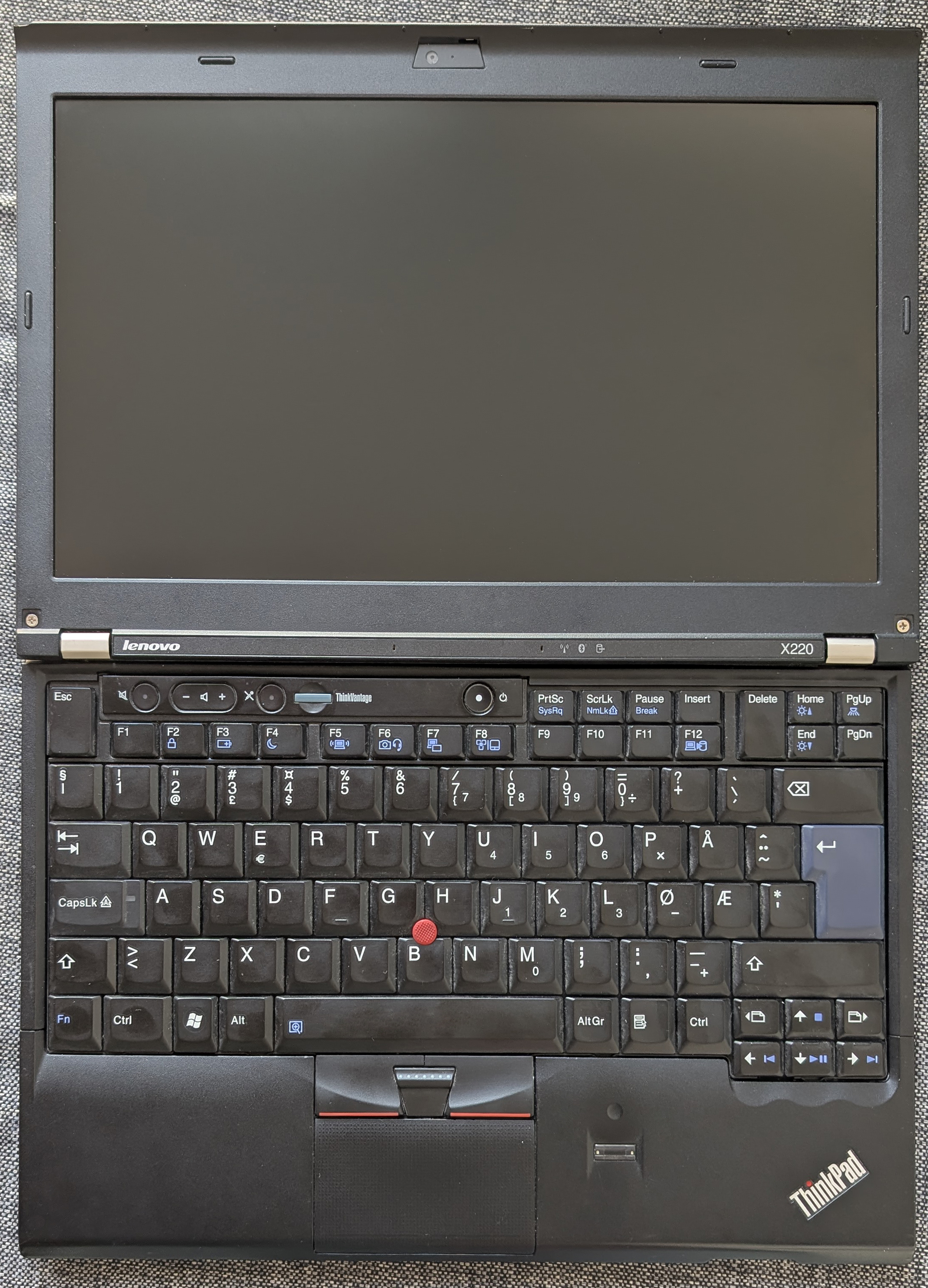
| Lenovo ThinkPad T480/T490/T14 | i5/i7 8th–11th gen, 8–16GB, 256–512GB SSD, 14" FHD | ~KES 25,000–55,000 | Legendary keyboard and Linux-friendly. The T480's dual-battery design means great runtime — but confirm the internal battery hasn't been removed. |
| Lenovo ThinkPad X1 Carbon (5th–8th gen) | i5/i7, 8–16GB, 256–512GB SSD, 1.1kg | ~KES 20,000–55,000 | The executive refurb. 1kg-class carbon-fibre body — brilliant for commuters. Older gens have non-upgradeable RAM, so buy 16GB if you can. |
| Refurb MacBook Air (M1 / Intel) | M1 8GB/256GB or Intel i5 | M1: ~KES 45,000–65,000; Intel: ~KES 25,000–40,000 | The M1 Air refurb is arguably the best-value laptop in Kenya — silent, 12+ hour real battery, still fast. Avoid Intel MacBooks in 2026 unless very cheap: macOS support is ending. |

New budget laptops (KES 45,000–85,000)
If you want a sealed box, local manufacturer warranty, and zero inspection risk, these are the new machines that make sense. The honest catch: at this price you get a plastic chassis and a mediocre screen — a refurb EliteBook is physically nicer.
| Model | Common spec | Kenya price | Notes |
|---|---|---|---|
| HP 15 / HP 250 G10 | Core i3-N305 or i5-1235U/1335U, 8GB, 256–512GB SSD, 15.6" | ~KES 48,000–75,000 | The default new laptop in Kenyan shops. Insist on the SSD version — some stock still ships with 1TB HDDs. |
| Lenovo IdeaPad Slim 3 | Ryzen 3 7320U / Core i3-N305 / i5-12450H, 8GB, 256–512GB SSD | ~KES 45,000–70,000 | Best keyboard in the budget class. Ryzen variants offer better battery than low-end Intels. |
| ASUS VivoBook 15/16 | Core i3/i5 12th–13th gen or Ryzen 5, 8–16GB, 512GB SSD | ~KES 52,000–85,000 | Often the cheapest way to get 16GB RAM new. Check whether the RAM is soldered before assuming upgrades. |
| Acer Aspire 3 / Aspire 5 | Ryzen 5 / Core i5, 8GB, 512GB SSD, 15.6" FHD | ~KES 50,000–80,000 | Frequent Jumia/discount-stock favourite. Specs vary wildly between sub-models — verify the exact CPU, not just 'Core i5'. |
Gaming laptops (KES 95,000–180,000)
Gaming is the one segment where buying new is strongly advised — GPUs work hard, cooling systems wear, and a dying refurb GPU is an expensive paperweight. The 2026 value tier is RTX 4050 territory:
| Model | Common spec | Kenya price | Notes |
|---|---|---|---|
| HP Victus 15/16 | i5-12450H/i5-13420H or Ryzen 5, RTX 3050/4050, 8–16GB | ~KES 95,000–135,000 | Most common new gaming laptop in Nairobi retail. 144Hz panel on most SKUs. |
| Lenovo LOQ 15 | i5-12450HX/13420H or Ryzen 7, RTX 3050/4050, 8–16GB | ~KES 100,000–140,000 | Better cooling than most rivals at the price; RAM is socketed and upgradeable. |
| Acer Nitro V 15 | i5-13420H, RTX 3050/4050, 8–16GB | ~KES 95,000–130,000 | Frequently the cheapest RTX 4050 route locally. Loud fans under load — normal for the class. |
| ASUS TUF Gaming A15/F15 | Ryzen 7 or i5/i7-H, RTX 3050–4070, 16GB | ~KES 110,000–180,000 | MIL-STD chassis and big battery options. The step up if you game daily. |
Power-cut reality check: gaming laptops on battery throttle hard. If your area has unreliable power, the GPU is for desk sessions — buy a decent UPS or surge protector (KES 3,000–8,000) alongside it.
MacBooks: new and refurbished
| Model | Spec | US price | Kenya (est.) | Notes |
|---|---|---|---|---|
| MacBook Air 13" / 15" (M4, 2025) | M4 10-core CPU, 16GB RAM, 256GB SSD base | $999 / $1,199 | Est. KES 140,000–175,000 | Still sold alongside the M5 — often discounted, making it the value MacBook. |
| MacBook Air 13" / 15" (M5, 2026) | M5 10-core CPU, 16GB RAM, 512GB base, Wi-Fi 7 | $1,099 / $1,299 | Est. KES 165,000–200,000 | Launched March 11, 2026. Doubled base storage and faster SSD; 18-hour rated battery. |
| MacBook Pro 14 (M5, 2025) | M5 10-core CPU/GPU, 16GB, 512GB, XDR display 120Hz | From $1,599 | Est. KES 235,000–280,000 | Released October 22, 2025. Up to 24-hour rated battery; M5 Pro and M5 Max tiers sit above for heavy pro work. |
The refurb angle: a MacBook Air M1 at KES 45,000–65,000 remains one of the best laptops shillings can buy in Kenya — silent, cool, all-day battery, and still supported. Check cycle count (System Settings → Battery), keyboard wear, and that iCloud/Find My is signed out. Avoid Intel MacBooks unless steeply discounted — macOS support is winding down.

Specs that actually matter at each budget
CPU generation matters more than 'Core i7' branding
An 8th-gen Core i5 (2018) has 4 cores and still runs Windows 11 — it's the practical minimum to buy in 2026. A 7th-gen i7 is actually slower than an 8th-gen i5 AND isn't officially Windows 11 supported. When a listing says 'Core i7' with no generation, ask.
RAM: 8GB is the floor, 16GB is the goal
8GB handles Chrome + Office + Zoom fine. 16GB is what you want for development, design, or keeping the laptop 5+ years. Check whether RAM is soldered (many ultrabooks, all MacBooks) or socketed (most ThinkPads, EliteBooks, Latitudes) — a soldered 8GB machine can never grow.
SSD or walk away
In 2026 there is no excuse for a 500GB mechanical HDD as the boot drive — yet they're still sold. A 256GB NVMe/SATA SSD transforms even a KES 20,000 refurb. If a refurb listing says 'HDD', negotiate a swap or budget KES 3,000–5,000 for an SSD upgrade.
Screen: 1080p IPS or don't bother
Many budget laptops and old refurbs ship 1366×768 TN panels — washed out, low-res, fatiguing. Target 1920×1080 IPS. Bonus checks: 300+ nits brightness for use near windows, and avoid 'HD' marketing that hides 768p.
Refurb inspection checklist
Do these checks in the shop, before money moves. Any seller who rushes you past them is telling you something.
1. Battery health before anything else
On Windows: run 'powercfg /batteryreport' and compare Full Charge Capacity vs Design Capacity — below ~70% health, negotiate a discount or a battery replacement (~KES 3,500–7,000 locally). On macOS: System Settings → Battery → Battery Health shows maximum capacity and cycle count; under ~80% or over ~800 cycles warrants a price cut.
2. SSD health and age
Run CrystalDiskInfo (free) and look at 'Health Status', power-on hours, and TBW. A refurb with a fresh aftermarket SSD is actually a good sign; a tired original drive on a 7-year-old unit is a bargaining chip.
3. Screen, keyboard, and ports — physically test all of it
Open a white page to hunt dead pixels and pressure marks (common on EliteBook G3–G5). Type on every key, test every USB port with a flash drive, plug in the charger and confirm it holds, check the webcam and hinges.
4. BIOS lock, Computrace, and MDM enrollment
Ex-corporate units can carry BIOS passwords, Computrace/Absolute persistence, or company MDM enrollment that phones home or locks the machine. Boot into BIOS (F10/F12/F1) and check settings are accessible; reinstall Windows cleanly if possible.
5. Windows licence status
Check Settings → Activation. Legit refurbs usually ship activated Windows 10/11 Pro (the original corporate licence). 'Windows not activated' or a KMS crack means future update headaches.
6. Charger quality
Original 65W charger vs a KES 800 clone matters — fake chargers cause battery wear and are a fire risk. Check the charger's weight, branding, and wattage rating.
Warranty questions to ask before paying
- How long is the warranty, and is it written on the receipt? (3–6 months is the Nairobi refurb norm)
- What does the warranty actually cover — motherboard and screen, or just 'service'?
- Who honours it: the shop itself, or a third-party repair desk? Where do I physically take it?
- What voids it? (Usually: opening the chassis, liquid damage, broken seals)
- Is the serial number recorded on the receipt? (Protects you if there's a dispute)
- What's the return window if it fails in the first week?
- For new laptops: is it a local Kenyan warranty or an international/grey-import warranty?
Rule of thumb: a seller offering zero warranty on a KES 30,000 refurb is pricing for a reason. The reputable Nairobi refurb shops stand behind 3–6 months; pay the small premium for it.
Which laptop for whom?
Student on a tight budget
Refurb ThinkPad T480s or EliteBook 840 G6 (~KES 25,000–35,000)
Better build, keyboard, and screen than any new laptop under KES 50,000. Upgradeable RAM/SSD means it can grow with you through a degree.
Office professional / remote worker
Refurb Latitude 5410 or new IdeaPad Slim 3 (KES 40,000–70,000)
A clean Latitude refurb with 16GB handles heavy browser and Office workloads. Prefer new-with-warranty? The Slim 3 or VivoBook 15 with an i5 is the safe choice.
Developer / designer
16GB RAM minimum: refurb X1 Carbon, T14, or MacBook Air M1/M4
Don't compromise below 16GB and a 1080p IPS screen. The M1 Air refurb (~KES 45,000–65,000) is absurdly good value for mobile dev and design work.
Gamer / engineering student
Lenovo LOQ 15 or HP Victus 15 with RTX 4050 (KES 95,000–140,000)
New-with-warranty matters here — gaming laptops work hard, and a dead GPU on a refurb is an expensive lesson. RTX 4050 is the 2026 value sweet spot.
Creative professional
MacBook Air M5 15" or MacBook Pro 14 M5
Colour-accurate XDR display (Pro), silent operation, and battery that survives Nairobi power cuts. Buy the 512GB tier — external SSDs add up.
FAQs
Is it safe to buy a refurbished laptop in Kenya?
Yes — the ex-corporate refurb market is the backbone of Kenyan laptop retail. Buy from an established shop that writes the warranty and serial number on the receipt, test the battery health and all ports in-store, and confirm there's no BIOS lock or corporate MDM enrollment. A KES 30,000 refurb business laptop routinely outperforms a KES 50,000 new consumer machine.
Refurbished vs new laptop: which is better value in 2026?
Under ~KES 70,000, refurbished business laptops (EliteBook, Latitude, ThinkPad) almost always win on build quality, keyboard, screen, and repairability. Above ~KES 90,000, new makes more sense — you get a full warranty, current-gen efficiency, and features like USB-C charging. Gaming laptops and MacBooks are the exception: buy new or very carefully vetted refurb.
What specs should a laptop have in 2026?
Minimum: 8th-gen Intel Core i5 or Ryzen 3000-series CPU (Windows 11 compatible), 8GB RAM, 256GB SSD, 1920×1080 IPS display. Recommended: 11th-gen i5/Ryzen 5000+, 16GB RAM, 512GB SSD. Anything with a mechanical HDD, 4GB RAM, or 1366×768 screen is a false economy in 2026.
How much is a good laptop in Kenya?
KES 20,000–35,000 buys a solid ex-corporate refurb (EliteBook 840, ThinkPad T480s). KES 45,000–80,000 buys a new Core i5/Ryzen 5 machine or a refurb MacBook Air M1. KES 95,000–140,000 buys a new RTX 4050 gaming laptop. KES 165,000+ is MacBook Air M5 / MacBook Pro territory.
What should I check on a used laptop battery?
On Windows run 'powercfg /batteryreport' and compare Full Charge vs Design capacity — below 70% health, negotiate or budget KES 3,500–7,000 for a replacement. On MacBook check Battery Health and cycle count (under 80% or over ~800 cycles = bargain point). Also do a real-world test: unplug and stream video for 20 minutes.
Where can I buy laptops in Kenya?
Established options include dedicated refurb retailers around Moi Avenue/Kimathi Street in Nairobi CBD, authorised brand stores (HP, Lenovo, ASUS resellers), and online platforms like Jumia's renewed section and specialist laptop stores. Online, filter for sellers with warranties and return windows; in person, always test before paying.
Sources
- Apple Newsroom: MacBook Air with M5 announcement (March 2026)
- Apple Support: MacBook Pro 14-inch (M5) tech specs
- Apple Support: MacBook Air 13-inch (M4, 2025) tech specs
- Jumia Kenya: renewed ThinkPad T480s listing (refurb pricing reference)
- Buy More Mall: refurbished laptop prices in Kenya 2026
- Smartphones Kenya: HP EliteBook 840 refurb pricing reference