Quick Summary
- Cement: 32.5 general-purpose bags run KES 620–855; structural 42.5 runs KES 750–1,350 depending on brand (Simba, Bamburi, Nyumba, Blue Triangle, Savannah).
- Mabati: G30 corrugated/box profile ~KES 430–560/m; versatile and roman tile ~KES 630–730/m; heavier G28 adds roughly 20–25%.
- Steel: 12m rebar D8 ~KES 605, D12 ~KES 1,335, D16 ~KES 2,325, D25 ~KES 6,875 — roughly KES 190–200/kg in Nairobi.
- Water tanks: 1,000L ~KES 4,500–8,500; 5,000L ~KES 24,500–45,000; 10,000L ~KES 45,500–80,000 from Roto, Kenpoly, Techno Plast.
- Paint: Crown 2026 list — Silk Vinyl Emulsion KES 16,268/20L; Super Gloss KES 18,638/20L; undercoats from ~KES 842/4L.
- Every price below is a real Kenyan retail range; items marked "estimated" are projections where no public price list exists — always confirm before ordering.
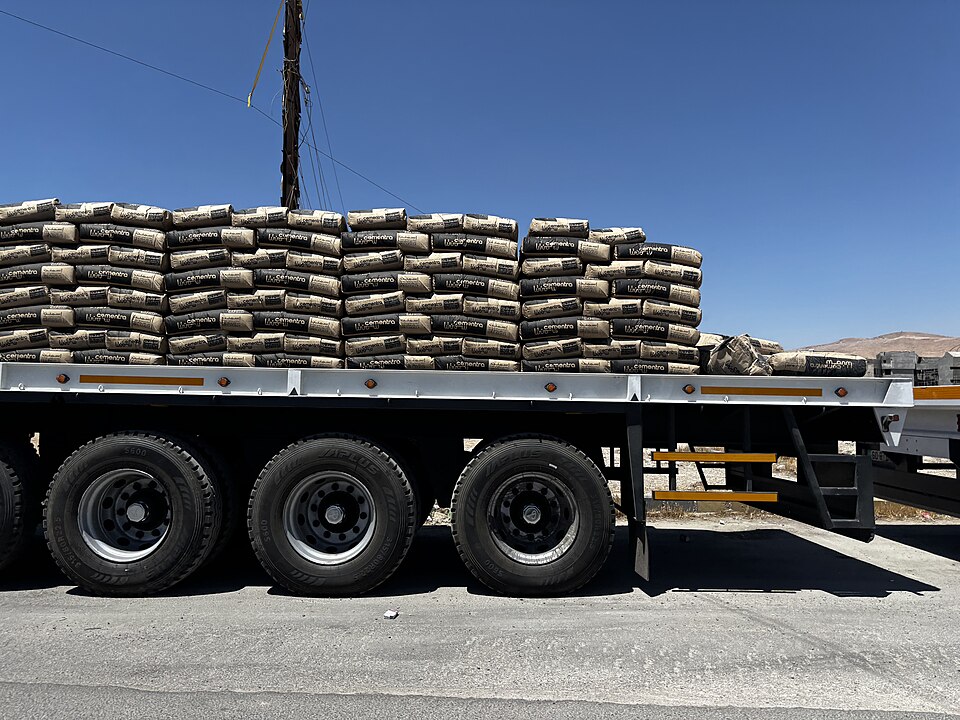
Cement: 32.5 vs 42.5, and what each brand costs
The grade number is the cement's 28-day compressive strength class in MPa. 32.5 (usually CEM II blended cement with pozzolana) covers mortar, plaster, screeds, blocks and ordinary concrete. 42.5(typically CEM I) is the structural grade for columns, beams, suspended slabs and foundations — it costs KES 200–500 more per bag. The R and N suffixes mark rapid versus normal early-strength gain: 32.5R sets faster, useful for formwork turnaround. Never substitute 32.5 where structural drawings specify 42.5 — that is where buildings fail.
| Brand | Grade | Price / 50kg bag | Notes |
|---|---|---|---|
| Simba Cement (National Cement) | 32.5R general purpose | KES 620 – 850 / 50kg bag | Factory list ~KES 620; Nairobi retail typically KES 730–830 |
| Simba Power (National Cement) | 42.5N structural | KES 750 – 1,200 / 50kg bag | Direct ~KES 750; retail commonly KES 950–1,200 |
| Bamburi Fundi | 22.5/32.5 masonry cement | KES 780 – 850 / 50kg bag | For mortar, plaster and screeds — not structural |
| Bamburi Tembo | 32.5 general purpose | KES 800 – 880 / 50kg bag | Everyday structural and masonry work |
| Bamburi Nguvu | CEM II 32.5N | KES 750 – 855 / 50kg bag | Most common retail Bamburi line in Nairobi |
| Bamburi PowerMax | CEM I 42.5N high early strength | KES 1,250 – 1,350 / 50kg bag | Premium structural; columns, beams, suspended slabs |
| Mombasa Cement — Nyumba | 32.5 PPC / 42.5 OPC | KES 620 – 820 / 50kg bag | Strong value pricing; huge Mombasa Rd plant |
| Blue Triangle (EAPCC) | 32.5 / 42.5 | KES 720 – 920 / 50kg bag | East African Portland Cement; 42.5 sits at the top of that range |
| Savannah Cement | 32.5R / 42.5R | KES 520 – 790 / 50kg bag | Factory shop lists 32.5R ~KES 520, 42.5R ~KES 640; retail higher |
| Ndovu / Rhino (ex-ARM stable) | 32.5 general purpose | KES 700 – 800 / 50kg bag (estimated) | Availability varies by region; confirm grade on the bag |
| Dangote Cement | 42.5 (imported) | Not retailed locally (estimated KES 1,000+ if imported) | Nigeria-based; has no Kenyan plant — watch for unauthorised imports |

Buying bulk (100+ bags) typically earns a 5–10% discount, and upcountry delivery adds roughly KES 30–80 per bag. One bag covers about 1.5–2m² of 50mm screed or makes ~35–40 standard mortar joints of blockwork; a 3-bedroom bungalow typically needs 150–250 bags all-in.
Mabati and roofing: gauge guide and prices per metre
Kenyan mabati is priced per metre of length and by gauge — remember the gauge numbers run backwards: G26 is thicker than G28, which is thicker than G30. Gauge 30 suits sheds and light-duty roofs; gauge 28 is the recommended minimum for a permanent home; gauge 26 is industrial territory. Profile affects price too: corrugated is cheapest, box profile mid-range, and tile-look profiles (versatile, roman tile) cost more for the aesthetics.
| Profile | Gauge | Price per metre | Best for |
|---|---|---|---|
| Corrugated / Dumuzas (plain) | G30 | KES 430 – 545 per metre | Budget roofs, sheds, rural builds |
| Corrugated Resincot (coloured) | G30 | KES 520 – 560 per metre | Permanent homes on a budget |
| Box Profile (Covermax, Royal, Alfa) | G30 | KES 430 – 612 per metre | Modern look; rentals, residential |
| Box Profile (MaxCover smooth) | G28 | KES 837 – 912 per metre | Heavier duty residential/commercial |
| Versatile (tile-look) | G30 | KES 630 – 730 per metre | Estate homes; tile appearance at steel cost |
| Versatile (MRM, smooth/textured) | G28 | KES 842 – 958 per metre | Premium tile-profile roofing |
| Roman Tile / Eurotile | G30 | KES 630 – 750 per metre (estimated) | High-end residential aesthetics |
| Industrial Box Profile | G26 | KES 1,100 – 1,200 per metre | Factories, warehouses, long spans |
| Stone-coated tiles | Panel/piece | KES 720+ per piece (estimated) | Premium finishes, church and institutional roofs |
| Ridges, valleys & flashing | G30 | KES 450 – 600 per piece (2m class) | Finishing accessories — budget them in |

Budget the accessories too
Sheets are only part of the bill. Add ridges/valleys (~KES 450–600 per 2m piece), roofing nails (~KES 8,000 per 50kg), and a roofing underlay or sisalation for permanent homes. MRM (Galsheet), Royal Mabati, Rafiki, Boma, Goldline and regional mills all price competitively — factory-direct sellers often deliver free to major towns, which beats paying transport from a Nairobi hardware twice over.
Steel, mesh, wire and the small hardware that adds up
Rebar in Kenya is sold as 12-metre (40-foot) bars at roughly KES 190–200 per kilogram in Nairobi, with Apex (TMX), Devki (TMT), Tononoka, Doshi and Accurate the main KEBS-certified mills. Central Kenya prices run lowest thanks to proximity to the Ruiru/Athi River mills; the Coast and far-western regions pay a transport premium.
| Item | Price (KES) | Notes |
|---|---|---|
| Rebar D8 (12m bar) | KES 520 – 620 | Links/stirrups; ~KES 190–200 per kg equivalent |
| Rebar D10 | KES 760 – 920 | Slab mesh-grade reinforcement |
| Rebar D12 | KES 1,100 – 1,335 | Beams, slabs — the workhorse size |
| Rebar D16 | KES 1,700 – 2,350 | Columns and structural beams |
| Rebar D20 | KES 2,800 – 3,850 | Heavy structural members |
| Rebar D25 | KES 4,600 – 6,875 | Foundations, columns on multi-storey work |
| Rebar D32 | KES 7,660 – 12,250 | Heavy civil and structural work |
| BRC mesh A142 / A610 | KES 6,500 – 16,800 per sheet | Slab reinforcement; A610 (heavy) at the top of range |
| Binding wire (25kg roll) | KES 3,800 – 4,350 | Tying rebar; allow ~10kg per tonne of steel |
| Hoop iron (20kg roll) | KES 3,000 – 3,250 | Wall ties and straps |
| Roofing/ordinary nails (50kg) | KES 7,500 – 8,000 | 2.5-inch to 6-inch sizes similar per-kg pricing |
| Barbed wire (240–610m roll) | KES 9,000 – 24,750 | Fencing; price scales with length and gauge |
| Chainlink (18m roll) | KES 2,800 – 46,200 | 12G/14G light to 10G heavy gauge; mesh size matters |
| Razor wire BTO-22 (7–10m) | KES 1,900 – 2,900 | Security topping for perimeter walls |
| DPC damp-proof course (30m roll) | KES 1,200 – 3,000 (estimated) | Polythene membrane under walls; also Sika InjectoCream for retrofits |

The underweight-bar trick
A known market problem is undersized bars sold as full diameter. A genuine D12 bar weighs ~0.888kg per metre (~10.7kg per 12m bar); a D16 ~18.9kg per bar. Cheap scales at the weighbridge or a calliper on rib-to-rib diameter catches most cheats. Ask for the mill certificate on structural orders and keep receipts listing brand and diameter.
Water tanks: Roto, Kenpoly, Techno Plast and friends
Rotomoulded polyethylene tanks from Roto (Roto Moulders), Kenpoly, Techno Plast and Kentainers dominate Kenyan storage. Look for UV-stabilised, food-grade multi-layer construction — the cheapest tanks achieve their price with thin walls that deform under full load. Prices below are standard-grade retail ranges; heavy-duty double-wall versions cost noticeably more.
| Capacity | Price range (KES) | Typical use |
|---|---|---|
| 250 – 500 litres | KES 3,500 – 6,500 | Loft/header tanks, small kitchens |
| 1,000 litres | KES 4,500 – 8,500 | Small household backup; premium heavy-grade units cost more |
| 1,500 – 2,000 litres | KES 8,250 – 14,000 | Family homes, rainwater harvesting |
| 3,000 litres | KES 14,500 – 18,500 | Popular mid-size for estates and rentals |
| 5,000 litres | KES 24,500 – 45,000 | Large homes and farms; heavy-gauge double-wall versions top the range |
| 8,000 litres | KES 32,500 – 55,000 | Institutions, irrigation buffer |
| 10,000 litres | KES 45,500 – 80,000 | Estates, schools, commercial backup |
| 16,000 – 24,000 litres | KES 98,500 – 155,000+ | Industrial and institutional storage |

Sizing rule: roughly 100–150 litres of storage per person per day of required backup. Position tanks on a level compacted or slabbed base — a tilted 5,000L tank carries five tonnes on a wall it was not designed for. Underground tanks and septic variants are separate product lines.
Paint: Crown and Sadolin prices, and how far a litre goes
Crown Paints publishes an official 2026 dealer price list, which makes it the most reliable benchmark — Sadolin and other brands sit in comparable tiers. Coverage matters more than tin price: emulsions cover roughly 8–12m² per litre per coat, gloss enamel 13–15m²/L on primed surfaces, and you need two coats over an undercoat. A 20L bucket of mid-range emulsion realistically covers ~150–200m² of wall across two coats.
| Product | Pack | Price (KES) | Notes |
|---|---|---|---|
| Crown Covermatt / economy emulsion | 4L – 20L | KES 900 – 5,600 | Budget interior walls; ~10m²/L per coat |
| Crown Vinyl Matt Luxury Emulsion | 4L – 20L | KES 780 – 13,000 | Mid-range interior; washable matt |
| Crown Silk Vinyl Emulsion (brilliant white) | 1L / 4L / 20L | KES 945 / 3,255 / 16,268 | Official 2026 Crown list price; premium silk finish |
| Crown Permaplast exterior emulsion | 4L – 20L | KES 2,870 – 15,086 | Long-life exterior grade — handles Kenyan UV and rain |
| Crown Universal Undercoat | 1L / 4L / 20L | KES 715 / 2,585 / 16,255 | High-opacity undercoat before gloss/enamel |
| Crown Emulsion Undercoat (ext/int) | 4L – 20L | KES 842 – 4,500 | Water-based first coat on new plaster |
| Crown Super Gloss (brilliant white) | 1L / 4L / 20L | KES 1,089 / 3,729 / 18,638 | Enamel for doors, frames, metal; 13–15m²/L per coat |
| Crown Eggshell (semi-gloss) | 1L – 20L | KES 1,048 – 20,654 | Kitchens/bathrooms; wipeable mid-sheen |
| Sadolin equivalents (emulsion/gloss) | 4L – 20L | KES 3,000 – 18,000 (estimated) | Comparable tier to Crown; check dealer price lists |
System order matters: primer/sealer → undercoat → two finish coats. Skipping the undercoat on new plaster forces a third topcoat and costs more than the undercoat saved. Deep/accent colours use different bases and price slightly differently than brilliant white.
Waterproofing: Dr Fixit and Sika chemistry that works
Kenyan waterproofing runs on two ecosystems: Dr Fixit (distributed through the Crown/Pidilite network) and Sika Kenya. Integral admixtures (Pidiproof LW+, Sika-1, Sikalite) go into the concrete or mortar mix itself; flexible coatings (Fastflex) and crystalline systems (Krystalline, Polyplus CP) treat surfaces on flat roofs, bathrooms, basements and water tanks.
| Product | Pack | Price (KES) | Use |
|---|---|---|---|
| Dr Fixit Pidiproof LW+ | 20L | KES 4,800 – 5,000 | Liquid integral waterproofing for concrete/mortar |
| Dr Fixit Fastflex | 12kg / 48kg | KES 5,000 – 13,500 | Flexible cementitious coating — flat roofs, bathrooms, tanks |
| Dr Fixit Krystalline / Polyplus CP | 25kg / 30kg | KES 6,000 – 9,500 | Crystalline waterproofing — basements, water-retaining structures |
| Dr Fixit Super Latex (SBR) | 20L | KES 13,000 | Bonding agent and repair mortars |
| Dr Fixit Dampguard / Crack-X | 1–12kg | KES 400 – 1,300 | Damp walls and crack filling |
| Sika-1 waterproofing admixture | 25L | KES 6,500 – 7,500 | Liquid admixture for renders, screeds and concrete |
| Sikalite (powder admixture) | 1kg / 20kg | KES 350 – 4,500 (estimated) | Powder waterproofing for mortar |
| APP torch-on membrane (4mm, 10m roll) | 10m x 1m | KES 6,500 (estimated) | Flat roof waterproofing — needs a fundi with a torch |
Match product to problem: admixtures for new concrete, Fastflex or crystalline slurry for leaking flat roofs and tanks, Dampguard/InjectoCream for rising damp in existing walls, torch-on membranes for large flat roofs. Waterproofing failures are almost always application failures — 4°C-cured surfaces, skipped primers, or too-thin coats.
Plumbing: PPR, HDPE, PVC and GI explained
PPR (green, heat-fused joints) is now the default for in-house hot and cold supply, rated PN16/PN20/PN25 by pressure. HDPE (black, in rolls) handles underground supply, irrigation and mains runs. PVC covers drainage and waste cheaply. GI pipe is legacy — it rusts from the inside and is being phased out wherever PPR reaches. Total plumbing materials for a 3-bedroom house typically run KES 120,000–250,000 installed.
| Item | Price (KES) | Notes |
|---|---|---|
| PPR pipe PN16 20mm (½") x 4m | KES 220 – 300 | Hot & cold lines; heat-fused joints |
| PPR pipe PN16 25mm (¾") x 4m | KES 320 – 400 | Main distribution to bathrooms/kitchens |
| PPR pipe PN16 32mm (1") x 4m | KES 500 – 600 | Risers and mains |
| PPR pipe PN20/PN25 (hot water/heavy) | KES 300 – 2,100 per 4m | Higher pressure rating costs ~15–30% more |
| HDPE pipe PN6 (per metre) | KES 16 – 470 | 16mm to 110mm; irrigation and mains supply lines |
| PVC drainage pipe (per metre) | KES 150 – 350 | Soil/waste lines; cheapest pipe option |
| GI pipe (galvanised iron) | KES 400 – 900 per metre (estimated) | Legacy plumbing; being replaced by PPR |
| PPR gate valve 20–50mm | KES 140 – 2,500 | 20mm ~KES 140–300; 50mm up to KES 2,500 |
| PPR fittings (sockets, elbows, tees) | KES 30 – 300 each | Female sockets ~KES 31–295 depending on size |
| Taps (bib/kitchen/shower mixers) | KES 450 – 6,500 | ABS/plastic cheap; brass mixers premium |
Budget for fittings separately — elbows, tees, sockets, threaded adaptors and valves add up fast (KES 30,000–70,000 on a full house). Buy PPR and its fittings from the same system so fusion joints match; a PPR welding machine itself rents cheaply or comes with your plumber.
Power tools: fundi-grade vs pro-grade in Kenya
Kenyan sites run on two tiers. The value tier — Ingco, Total, DCA, Edon — puts a capable grinder or welder in hand for KES 5,000–28,000. The professional tier — Bosch, Makita, DeWalt, Jasic — costs two to four times more but survives daily abuse, holds duty cycles under load and carries real warranty support.
| Tool | Tier | Price (KES) | Notes |
|---|---|---|---|
| Ingco 710W angle grinder (115mm) | Fundi-grade | KES 5,500 – 6,500 | Daily site workhorse; cheap consumables |
| DCA 750W angle grinder | Fundi-grade | KES 5,499 – 6,000 | Jumia staple; solid for cutting/grinding |
| Total 20V cordless grinder kit (4.0Ah) | Fundi-grade+ | KES 16,500 | Brushless, battery + charger + discs included |
| DCA 20V brushless grinder kit (2x4Ah) | Fundi-grade+ | KES 16,500 | Auto brake + kickback protection |
| Ingco/Total MMA inverter welder 160–250A | Fundi-grade | KES 11,900 – 28,000 | IGBT inverters; LED display; gates and grills work |
| Jasic ARC-200 welder | Pro-grade | KES 25,000 – 38,000 (estimated) | Reliable professional inverter; fabricator favourite |
| Bosch / Makita / DeWalt drill or grinder | Pro-grade | KES 12,000 – 45,000 (estimated) | 2–4x the price; survives years of daily site abuse |
| Circular saw / mitre saw (Ingco–DeWalt) | Both tiers | KES 9,000 – 55,000 (estimated) | Formwork and roofing timber cutting |

Hybrid strategy that Kenyan fundis actually use: value-tier for tools with cheap replaceable parts (grinders, sanders) and pro-grade for anything whose failure stalls the site (welder, rotary hammer, the one good cordless drill platform you buy batteries into).
Safety gear: cheap insurance you cannot skip
DOSHS (Directorate of Occupational Safety and Health) requirements aside, PPE is the cheapest line item on any build and the one most often skipped on informal sites. Current Kenyan price ranges:
| Item | Price range (KES) | Notes |
|---|---|---|
| Safety helmet | KES 180 – 2,900 | KS 06-963 marked; adjustable suspension |
| Steel-toe gumboots | KES 950 – 4,500 | Vaultex-class ~KES 2,749; waterproof + steel cap |
| Safety boots (leather, steel toe) | KES 1,800 – 8,500 | Higher ankle protection than gumboots |
| Reflector vest / jacket | KES 200 – 3,500 | Mandatory on most formal sites |
| Work gloves (cut-resistant) | KES 150 – 2,800 | EN388-marked cut levels for rebar/mabati handling |
| Full-body harness + lanyard | KES 4,500 – 28,500 | Non-negotiable above 2m; shock absorber included |
| Ear muffs / respirator masks | KES 400 – 6,500 | Grinding dust and noise protection |
| Starter PPE bundle (helmet+boots+gloves) | KES 3,600 – 6,000 | Jumia kits bundle the basics cheaply |

Buying smart in Kenya: transport, seasonality and fakes
Location is a multiplier. Nairobi prices are lowest near the Industrial Area/Enterprise Road corridor and the mill zones in Ruiru and Athi River; the Coast, Kisumu and upcountry towns carry a 5–15% premium on heavy goods once transport lands. Factory-direct sellers (Savannah's online shop, National Cement depots, MRM stockists, Roto/Kenpoly delivery networks) increasingly ship to site — compare their delivered price against your local hardware's shelf price.
Prices move with forex (imported steel and resins), fuel costs and the rainy-season construction slowdown — March–May often softens cement and mabati prices, while January and September demand spikes tighten them. On fakes: check the KEBS mark on cement bags and mabati warranty certificates, weigh rebar deliveries, and never buy unbranded "wholesale" cement off a pickup — reground and underweight bags are a documented problem. Everything marked "estimated" in this guide is exactly that; verify current quotes before budgeting.
FAQs
What is the price of one bag of cement in Kenya in 2026?
A 50kg bag of 32.5 general-purpose cement averages KES 620–855 in Nairobi — Simba 32.5R around KES 730–830 retail, Bamburi Nguvu KES 750–855, Nyumba KES 720–820, Savannah KES 695–790. Structural 42.5 grades cost more: Simba Power 42.5N retails KES 950–1,200 and Bamburi PowerMax around KES 1,250–1,350. Factory-direct prices are lower (Simba lists KES 620/750) but you pay transport; upcountry add KES 30–80 per bag.
What is the difference between cement 32.5 and 42.5?
The numbers are the cement's 28-day compressive strength class in megapascals (MPa). 32.5 (usually CEM II blended cement, e.g. Nguvu, Tembo, Simba 32.5R) is fine for mortar, plaster, screeds, blocks and ordinary concrete. 42.5 (CEM I, e.g. PowerMax, Simba Power, Blue Triangle 42.5) develops higher early and final strength — use it for structural columns, beams, suspended slabs and foundations where the engineer specifies it. R/N suffixes denote rapid vs normal early-strength gain. Never substitute 32.5 where structural drawings call for 42.5.
How much is mabati per metre in Kenya?
As of 2026, gauge 30 corrugated or box profile runs KES 430–560 per metre, gauge 30 versatile/roman-tile profiles KES 630–730 per metre, and heavier gauge 28 sheets KES 730–958 per metre depending on profile and finish. Plain Dumuzas G30 is around KES 461/m at MRM while G26 industrial box profile reaches ~KES 1,140/m. Remember the price is per metre of length — a 3-metre sheet at KES 530/m costs ~KES 1,590 — plus ridges, valleys, nails and transport.
Which is better: Ingco, Total, DCA or Bosch/Makita tools for a fundi?
Ingco, Total and DCA are the value tier dominating Kenyan sites — an Ingco 710W grinder is ~KES 5,950 versus three to four times that for Bosch/Makita/DeWalt. For occasional and moderate daily use the value brands are genuinely adequate and their accessories are cheap and everywhere. For continuous heavy-duty professional use, pro-grade tools justify the premium through motor life, duty cycles and warranty support. A common Kenyan strategy: buy fundi-grade for consumable-heavy tools and pro-grade for the tools you cannot afford to have die mid-job.
How do I avoid fake cement and substandard steel in Kenya?
Buy cement from authorised distributors or factory shops — check the bag for the KEBS standardisation mark, manufacture date (use within ~2 months), and brand-specific security features; a bag that feels light or has re-glued seams is a red flag. For steel, stick to KEBS-certified mills (Apex, Devki, Tononoka, Doshi) and ask for the mill test certificate on structural orders; verify bar diameter with a calliper if suspicious — undersized 'D12' rebars are a known market problem. Keep receipts showing quantities and brands for accountability.
What size water tank do I need for a Kenyan home?
Budget roughly 100–150 litres per person per day of storage for reliable backup. A small household topping up Nairobi water does fine with 1,000–2,000L (KES 4,500–14,000); a family wanting a week of buffer should look at 5,000L (KES 24,500–45,000); homes fully dependent on rain harvesting or boreholes often need 10,000L+ (KES 45,500–80,000). Roto, Kenpoly, Techno Plast and Kentainers are the main rotomoulded brands — UV-stabilised, food-grade polyethylene — and prices vary more by wall grade than by brand.
Sources
- National Cement: Simba Power 42.5N and Simba 32.5R factory pricing
- Savannah Cement: official online pricing (32.5R / 42.5R)
- Construction Kenya: 2026 cement prices by brand
- Construction Kenya: 2026 rebar, binding wire and hoop iron prices
- Structrum: per-metre mabati prices — MRM, Royal, Rafiki and others
- Goldline Mabati: 2026 per-metre pricing and gauge guidance
- Crown Paints: official 2026 price list (PDF)
- Builders Store Kenya: Dr Fixit waterproofing price list
- Builders Store Kenya: PPR pipe and gate valve prices
- Grekkon: HDPE pipe prices per metre by diameter
- Roto Tank Company: tank sizes and pricing
- Zeka Nairobi: chainlink, barbed wire, BRC and nails pricing
- Bansi Suppliers: 2026 safety equipment price ranges
- Jumia Kenya: DCA/Ingco tool street prices